


| Typ | Book SoftCover |
|---|---|
| Language |
 Englisch
|
| EAN | 4250697526116 |
| Product No. | 4250697526116 |
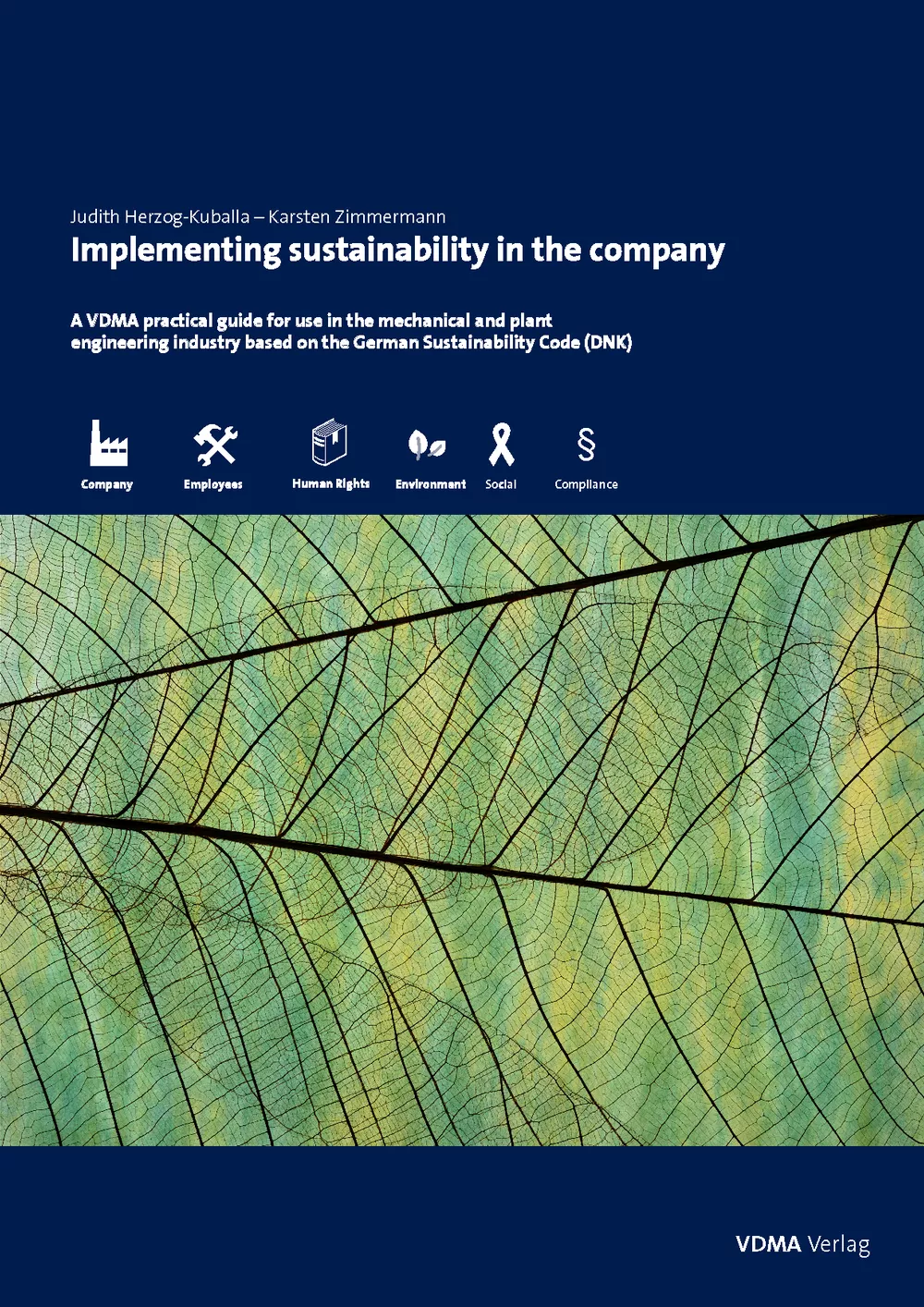
Implementing Sustainability in the Company
A practical Guide for the use in the Engeneering Industry
Specifically, sustainability is pursued on various levels:
1. development of a sustainable business model, as our technologies are the key to CO2 reduction, energy efficiency and resource conservation in industry.
2. strong commitment at local level but also in subsidiaries abroad. This has a long tradition in the industry, which is characterized by medium-sized companies.
3. establishing good corporate governance through the long-term and strategic integration of sustainability in corporate processes.
This guide will support you in the strategic anchoring of sustainability in particular. It has been explicitly designed for small and medium-sized enterprises and offers you practice-oriented analysis and strategy tools to anchor sustainability in your processes. You can also use the guide to meet the socio-ecological requirements of your customers and to create a non-financial report in accordance with the German Sustainability Code (DNK) for your sustainability communication.
Table of contents
- 1. Notes on the guideline
- 2. Relevance considerations
- 3. The German Sustainability Code
- 4. The Sustainability Code in context
- 4.1 Agenda 2030: The 17 Sustainable Development Goals (SDG)
- 4.2 Organization for Economic Cooperation and Development (OECD)
- 4.3 Global Reporting Initiative (GRI)
- 4.4 European Federation of Financial Analysts Societies (EFFAS)
- 4.5 United Nations Global Compact (UNGC)
- 4.6 EcoVadis 4.7 Sedex
- 4.8 Blue Competence
- 4.9 German Sustainability Strategy
- 4.10 National Action Plan on Human Rights (NAP)
- 4.11 CSR Directive Implementation Act (CSR-RUG)
- 5 Sustainability management
- 5.1 Developing the right sustainability strategy .
- 5.2 Goals
- 5.3 Indicators and key figures
- 5.4 Materiality and materiality analyses
- 5.5 Stakeholders
- 5.6 Value chain analysis
- 5.7 Due diligence
- 5.8 Risk management
- 5.9 Concepts and measures
- 5.10 Key aspects of sustainability
- 6 Success factors for strategy development
- 6.1 Responsibility, commitment and mandate of the company management
- 6.2 Involvement of the divisions and employees
- 6.3 Data collection and availability 6.4 Resources required
- 7 Success factors for strategy implementation
- 7.1 Implementation and continuity
- 7.2 Sustainability-relevant management systems
- 7.2.1 What the DNK says
- 7.2.2 Practical tips and recommendations
- 8 Preparation, implementation and review of the DNK declaration
- 8.1 Reporting process 8.2 Application level and general information
- 8.3 Review of the Code declaration (comply-or-explain rule)
- 9. requirements for fulfilling the reporting obligation under the CSR-RUG
- 10. requirements for reporting on the National Action Plan for Business and Human Rights (NAP)
- 11 The Sustainability Code (structure and criteria)
- 11.1 Criterion 1: Strategy
- 11.2 Criterion 2: Materiality
- 11.3 Criterion 3: Objectives
- 11.4 Criterion 4: Depth of the value chain
- 11.5 Criterion 5: Responsibility
- 11.6 Criterion 6: Rules and processes
- 11.7 Criterion 7: Control
- 11.8 Criterion 8: Incentive systems
- 11.9 Criterion 9: Stakeholders
- 11.10 Criterion 10: Innovation and products
- 11.11 Criterion 11: Use of natural resources
- 11.12 Criterion 12: Resource management
- 11.13 Criterion 13: Climate-relevant emissions
- 11.14 Criterion 14: Employee rights
- 11.15 Criterion 15: Equal opportunities
- 11.16 Criterion 16: Qualification
- 11.17 Criterion 17: Human rights
- 11.18 Criterion 18: Community
- 11.19 Criterion 19: Political influence
- 11.20 Criterion 20: Conduct in compliance with laws and regulations
- 12. overviews, synopses and working aids . 135
- 12.1 Synopsis DNK, EcoVadis, Blue Competence, UN Global Compact, Common Good Matrix and SDGs
- 12.2 Quick overview of goals, criteria, guiding principles and useful standards